For cleaning businesses
Social media for a cleaning business, without the stock photos
There are around 79,000 cleaning, hygiene and waste businesses in the UK and 89% of them are micro. Cleaning is the easiest trade in the country to photograph and one of the least well marketed, every job you finish is content, and most of it is being thrown away.
01 · Plan the year
The dates the phone rings
Cleaning demand is not smooth and pretending it is costs you the peaks. Domestic work runs on the domestic year; commercial work runs on the office year; end-of-tenancy runs on tenancy break dates. Three calendars, and you probably serve at least two of them.
-
End of the academic year, late June to mid-September
Student tenancies almost all end in the summer, and every one of them is an end-of-tenancy clean with a deposit riding on it.
Post From May. Letting agents book blocks; students book two days before and panic.
-
The clocks go back, Sunday 25 October 2026
Low winter sun through a window shows every mark on the glass and every smear on a worktop. People genuinely notice their house is dirty in late October.
Post That week. It is the most natural prompt for a deep clean in the calendar and nobody uses it.
-
The pre-Christmas deep clean, the last fortnight of November
Booked in November for December. A December campaign is a campaign for next year.
Post From the 15th of November, with your actual remaining slots.
-
Office January reviews, the first two weeks of December
Commercial contracts are reviewed and re-let for January while everyone is still at their desk in December.
Post Early December, aimed at facilities and office managers rather than at householders.
-
New year, the first fortnight of January
The single biggest domestic enquiry spike of the year, and it lasts about ten days.
Post From the 27th of December. People decide between Christmas and New Year, not in January.
-
Spring, from the clocks going forward on Sunday 28 March 2027
Spring cleaning is real and it is triggered by light, not by a date. The weekend the evenings get longer is the weekend people look at their windows.
Post The week before. Note that in 2027 the clocks change on Easter Sunday, so the long weekend and the light arrive together.
-
The Easter and summer holidays
Holiday lets and Airbnb changeovers cluster hard, and turnaround cleaning is repeat work with a fixed schedule.
Post Six weeks ahead of each holiday, aimed at owners rather than guests.
How to actually do the planning
- Decide which of the three calendars you actually serve, domestic, commercial, or lettings. Trying to talk to all three in one feed is why most cleaning pages read as generic.
- Take the four or five dates that apply to you and count back a fortnight. That is where the post goes.
- Everything else is before-and-afters from the week you had. You will never run short; you are producing content every day whether you photograph it or not.
02 · What to post
Eight things you could photograph this week
-
Before and after, same angle
Stand in the same spot for both. The comparison only works if nothing else changed, and the ones that go wrong are the ones shot from two different corners.
-
The bit nobody else does
Behind the toilet, the oven door glass, the window tracks. Your differentiator is the thing your competitor skips.
-
What is in the bag
Lay the kit out and say what each thing is for. It reads as professional and it answers "do I need to provide anything?" before they ask.
-
The end-of-tenancy checklist
Landlords and letting agents search for this. Post the actual list, the whole list, not a teaser.
-
One product you refuse to use, and why
Bleach on grout, wrong pH on stone. Specific, useful, and it establishes that you know things.
-
A regular's kitchen, with permission
Weekly clean, six months in. Consistency is a harder sell than a one-off deep clean and it is worth more.
-
How long a deep clean actually takes
Five hours for a three-bed, honestly stated. Quotes get accepted faster when the customer already understands the number.
-
Your insurance and DBS
Say it plainly, once a month. Plenty of the people choosing between you and someone cheaper are choosing on exactly this.
03 · How often
How often, realistically
Two or three a week is plenty, and one of them should be a before-and-after. That single format does more work than everything else combined because it is the proof.
Photograph every job, thirty seconds, two shots, and decide later what to use. The cost of taking a photograph you never post is nothing. The cost of finishing a spectacular job with no photograph is a week of content.
Ask permission at the point of booking, not at the door with a camera in your hand. It becomes a normal part of the arrangement rather than an awkward request.
04 · Take a better photograph
How to shoot a before-and-after people believe
This is the only trade on the site where the photograph is the proof rather than the decoration, which makes it the one where getting it wrong costs most. The pair below is the same kitchen. The fault in the first frame is not that it is dirty, it is that it was shot from a different place, at a different angle, in different light, which is exactly what makes a genuine transformation read as a trick.
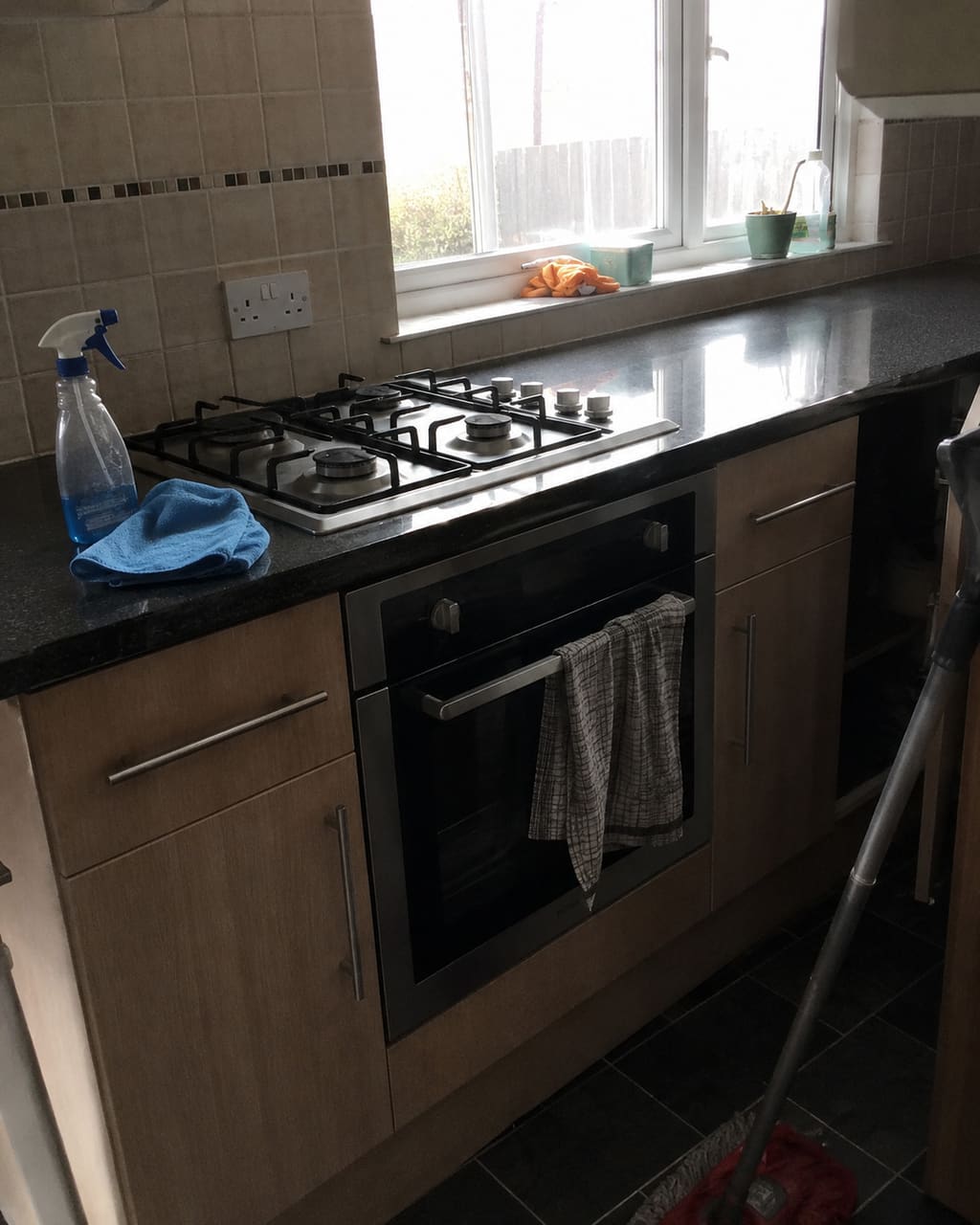
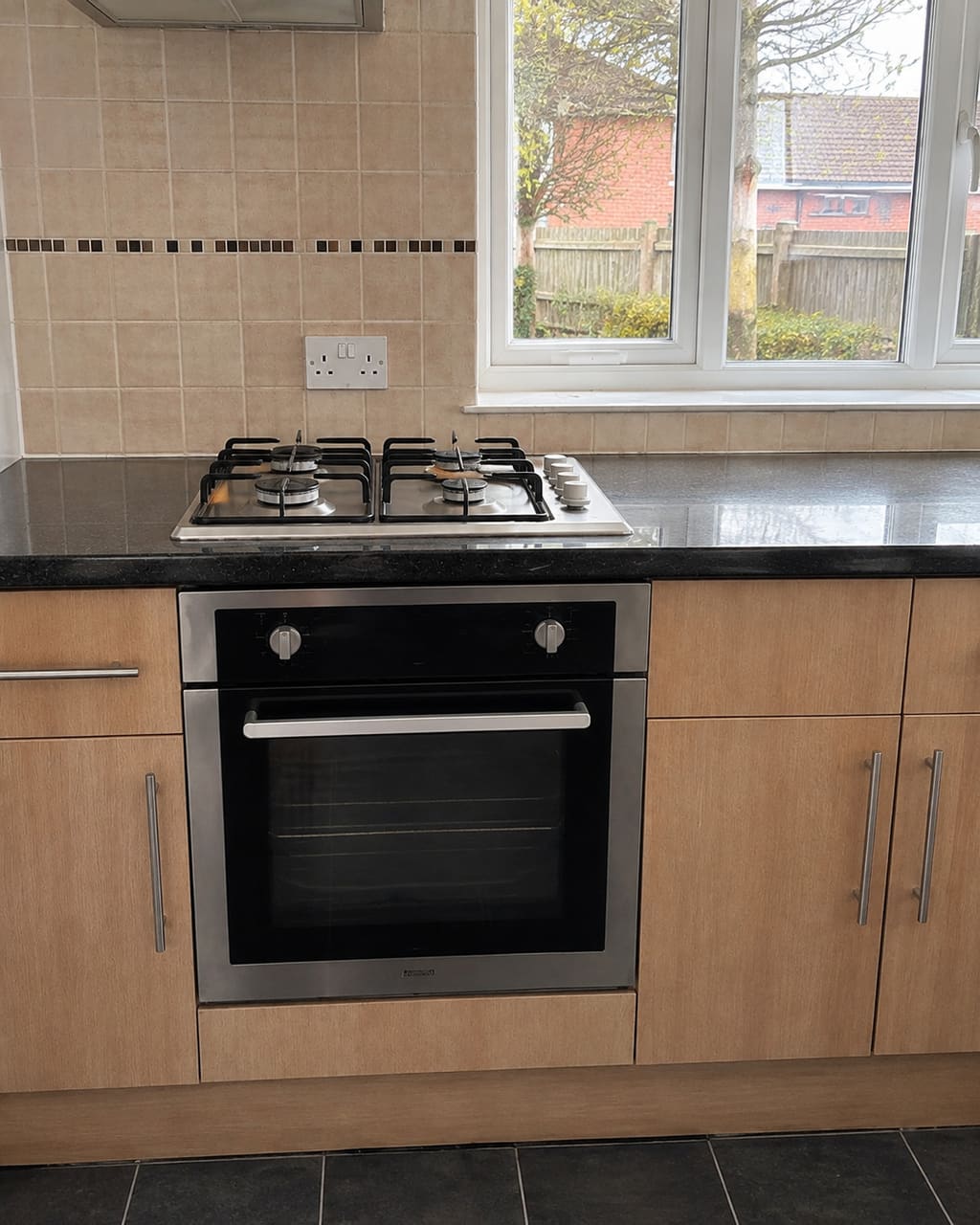
Illustrative examples, generated rather than photographed in a real business.
-
Mark where you stood
Take the before from the doorway with your heels against the frame, and take the after from precisely the same spot. If you have to, put a bit of tape on the floor. Anything that changes between the two frames other than the cleanliness gives people permission to disbelieve you, and the two things that change most are position and height.
-
Same light, both frames
Open the blinds for the before as well as the after. The oldest and most transparent trick in cleaning marketing is a dim before and a bright after, and customers have seen it enough times to have stopped believing any of it. An honest before shot in good light is more persuasive than a dishonest one, because it is obviously honest.
-
Get the phone level
A tilted horizon is what makes a photograph read as a snap rather than as evidence. Turn on the grid in your camera settings, it takes ten seconds, once, forever, and line the worktop up with a horizontal. This single change does more for how professional your feed looks than anything else in this list.
-
Move your own kit out
A mop bucket, a caddy or a pair of blue gloves in the corner of the after shot tells the eye the job is still in progress. Ten seconds of tidying the frame, not the room.
-
One thing, close
Whole rooms are hard to read on a phone screen. The oven door glass, the shower screen, the tracks of a window: a tight shot of one surface makes a far stronger argument than a wide shot of a whole kitchen, and it is the shot that shows you did the bit other people skip.
05 · The UK part
The British specifics
- End-of-tenancy is a UK-specific product with UK-specific expectations, tied to the deposit protection schemes. It is a distinct service, with a distinct buyer, and it deserves distinct posts.
- Say whether you are insured and DBS-checked. It is the standard British trust signal, and the American pages ranking for these searches do not know it exists.
- The British Cleaning Council puts the sector at 78,915 businesses, 89% of them employing fewer than ten people. You are competing with other one-van operations on trust, not with a national brand on price.
- Commercial cleaning follows the British office calendar, which means January contract starts decided in early December and a dead fortnight over Christmas that you should have staffed for in October.
- If you take waste away from a job, a house clearance, a garage, a hoarding case, you need to be registered with the Environment Agency in England (the other UK nations have their own regulators) as a waste carrier, and that is a genuinely differentiating thing to say out loud.
06 · Mistakes
What not to do
- Stock photographs of a smiling woman in yellow gloves. Everyone uses them, nobody believes them, and they make a real business look like a lead-generation site.
- Before-and-afters shot in different light. If the after is just brighter, it reads as a trick even when the work was genuine.
- Naming clients or showing recognisable interiors without asking. It is a trust business, and one complaint costs more than a year of posts earns.
07 · And then, us
And then, the part we do
The lesson above works with no product at all. This is the pitch, and it is the same kitchen you were just shown how to photograph, one photograph, not three. What changes across the row is how much of it the assistant is allowed to touch.
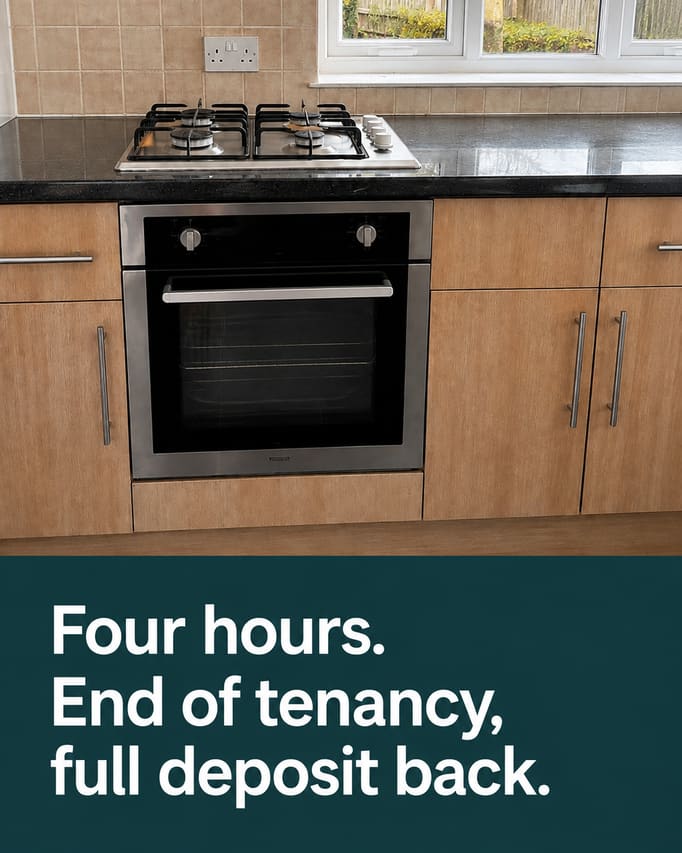
Layout Pro
The words and the panels go on top. The photograph underneath is exactly the one you took.
The proof post. The result, the time, and the outcome that matters.
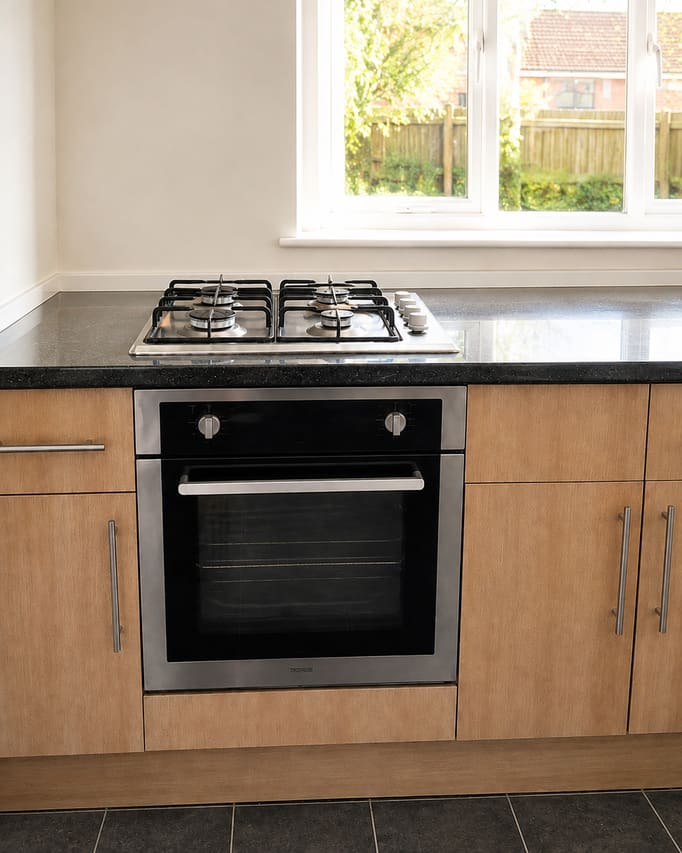
Visual Artist
Your subject is kept as it is, and the setting around it is replaced.
The differentiator. Same work, a background that does not fight it.
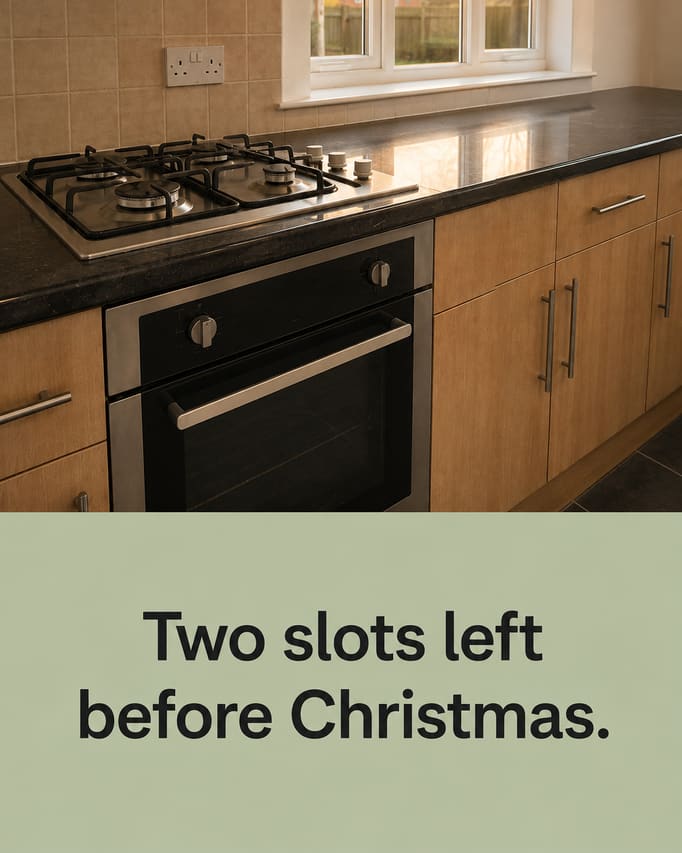
Image Maestro
Your subject is locked, then a new scene is built around it from a different angle.
The urgency post. Real slots, a real date, out in mid-November.
Illustrative examples, generated rather than photographed in a real business.
One post, whichever you pick.
Where it stops being three posts and starts being a campaign
The useful version is not three posts, it is the pre-Christmas run: the one that goes out on the 15th of November saying the diary is opening, the one a week later with the two remaining Saturdays, and the last-call on the 1st of December, written once, dated, queued, and out of your head. Cleaning businesses lose that revenue every year not because they do not know the dates but because the middle of November is when they are flat out.
Sources
Where the numbers in this guide come from
Where a figure is somebody else's published work, it is linked so you can check it. Where a rule is stated, the link goes to the legislation or the regulator rather than to an article about it.
-
78,915 cleaning, hygiene and waste businesses
-
89% of them employ fewer than ten people
Or let it write them for you.
SocialPostxr takes a photo and a line about your business and gives you three finished posts to pick from. The free plan needs no card.